

The first thing about the Azores Islands, the Portuguese archipelago thrust way out in the North Atlantic, is that it’s really difficult to get to. It’s surrounded by weather systems that can go haywire at any time. So it literally took us two days of aborted landings to arrive there, with wind gusts and storm bursts getting us so close to a touchdown you could swipe your hand along the runway, only to veer back up into the sky several times.
We had to return to Lisbon, Portugal, without landing on São Miguel island - over two hours away - and over the next day fly back to the Azores two more times. I was traveling with my husband and three other friends, all of whom work for a European airline, so bouncing around in bad weather and failed touchdowns are business as usual, while understandably the rest of the plane was freaking out.
While it was disappointing to arrive a couple of days later than expected, the approach was a thrill in itself (perhaps not so much for some of our fellow passengers) and an excellent intro to what to expect from the islands.
But then finally, I get my first whiff of the Azores stepping directly out of the plane onto the tarmac: a heady, humid cocktail of salt spray and emerald volcanic vegetation, awash in geysers, waterfalls, crashing waves, rivers, lakes, hot springs, and just water, water everywhere.
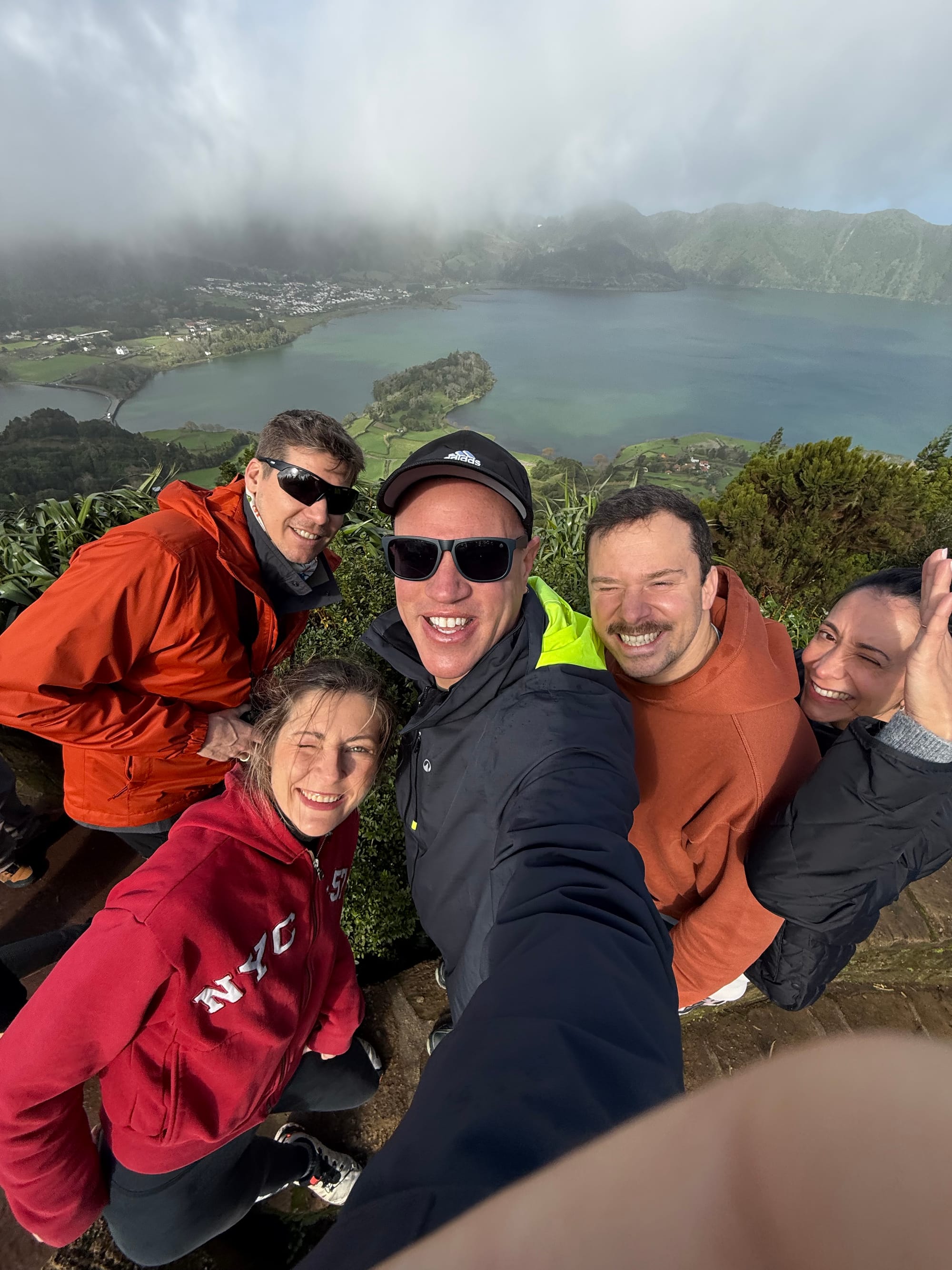
The sensation is elemental and also a bit atemporal, like you just walked into “Jurassic Park.” A dinosaur could lumber around the corner and you wouldn’t be terribly surprised. In mid-Feb, when we were there, it was damp and cool, but not cold. You could get away with hiking shorts, a t-shirt and a windbreaker. The weather is generally better in summer - though fair warning, it’s constantly changeable year-round - but it’s a personal quirk of mine to try to avoid high season, with the consequent bigger crowds.
Behold some vignettes and snippets of the experience, not in chronological order but yes with useful highlights.
Not Your Package Vacation
Most people hear "island vacation" and think of white sand, lukewarm turquoise shallows, a five-star resort with a cocktail in your hand. If that’s what you’re looking for, stay on the plane. Fly to the Bahamas. The Azores are the opposite, baptizing you in the cold, chaotic energy of the deep ocean. This is a vertical, dripping, basalt-enclosed fortress where water is the architect and the primary antagonist.
I didn't come here to tan.
The Mouth of the Earth
Nothing is that far away on the islands, but an easy initial base camp close to the airport is Ponta Delgada on the island of São Miguel, and the city is a polite suggestion of civilization. It’s lots of whitewashed walls and black volcanic stone, a charming local farmer’s market, and in general a tidy, Portuguese colonial dream that still feels on the verge of being swallowed by the peaks rising behind it.
Despite Ponta Delgada’s European charm, the air is still thick with the Atlantic’s salt, a port-city reminder that the wilds are only a fifteen-minute drive away. It’s good to stay for a night or two but it doesn’t need to be the anchor for a longer trip.
And so we left the city. Within an hour, we got to the rim of Sete Cidades, looking down at high-mountain twin lakes so often enshrouded in mist that moves so quickly it looks like a time-lapse.
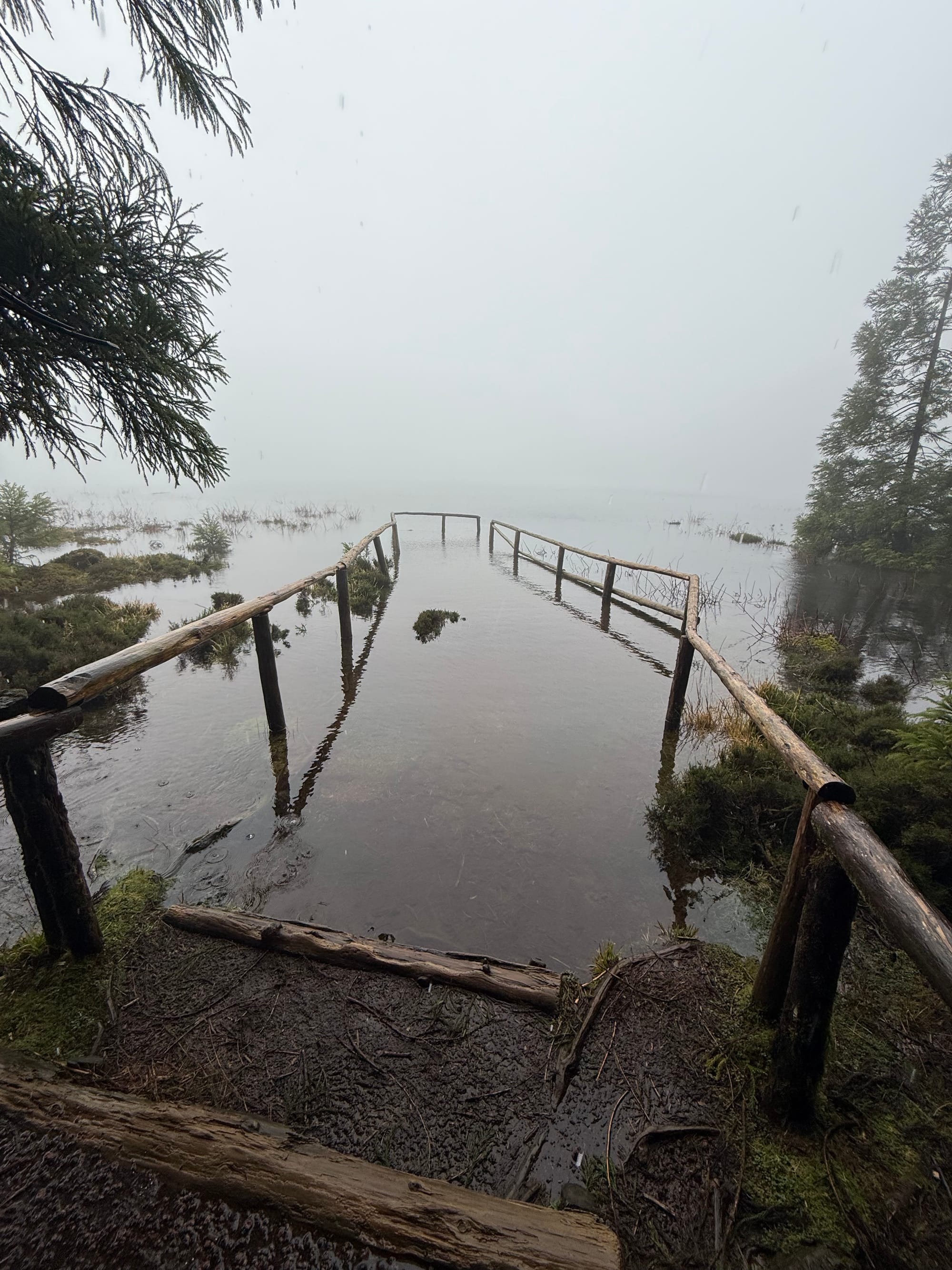
Later, we trekked a bit further to get to the Reserva Natural Lagoa do Fogo, “Fire Lake”. Another high-altitude crater lake that came at us like a prehistoric myth. The wind whips across the caldera, and I thought to myself that it’s not just a lake, but the mouth of a sleeping volcanic giant.
For meals, we ended up eating at the same restaurant three times, the Restaurante Associação Agrícola de São Miguel, a farmer’s cooperative that highlights beef, cheeses, wines, and other products all sourced fresh from the island’s small-batch producers.
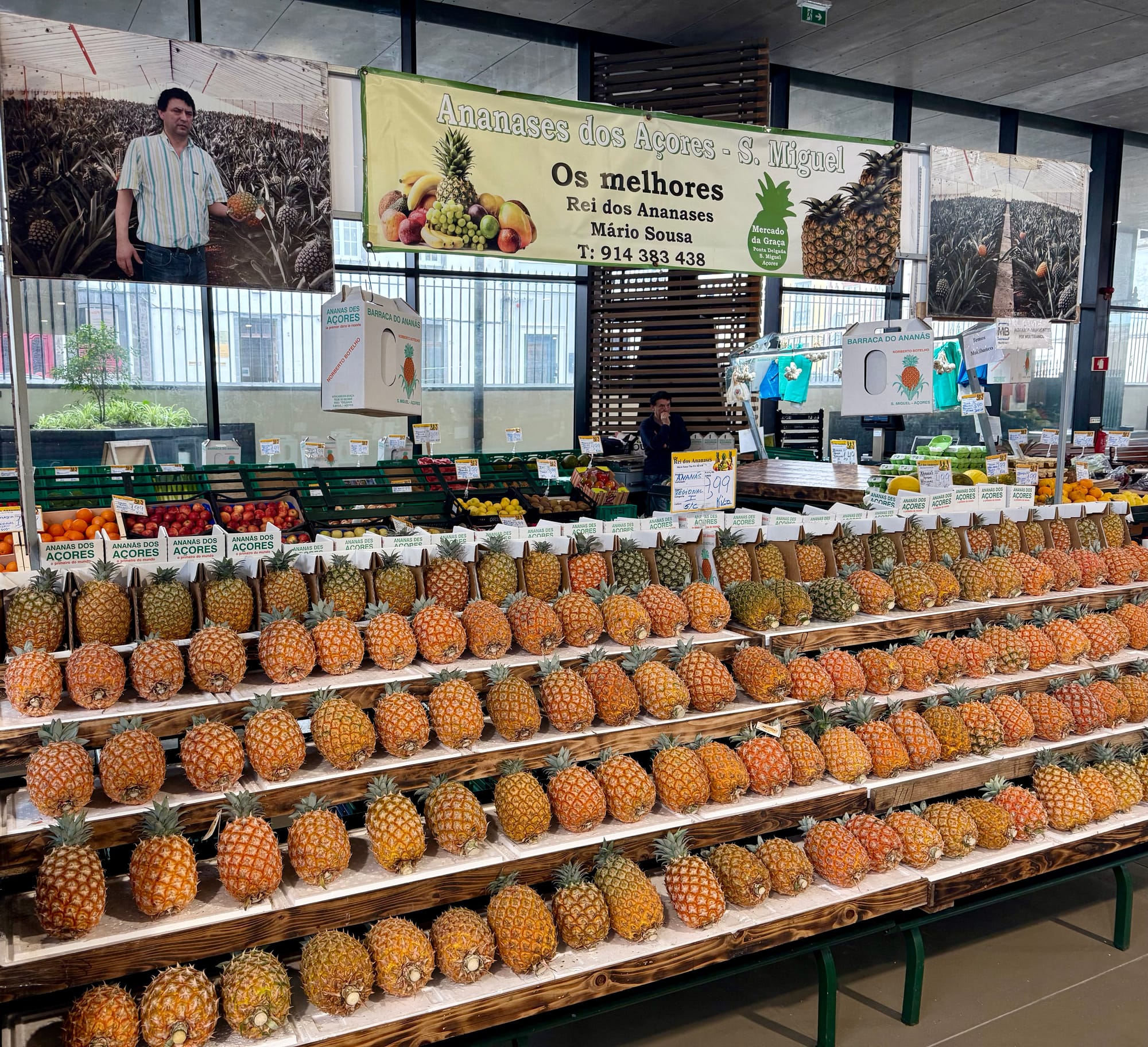
There were also plenty of fresh fish options across the island, unsurprisingly. It’s also a huge producer of pineapple products- great gifts to bring back home are all sorts of pineapple iterations, like jams, chocolates, cookies, etc. We enjoyed a number of pineapple-based cocktails, well-deserved after long hikes.
Your Town is On Fire
But the real nuts stuff started in the town of Furnas. Your vacation will include a helping of malodorous sulfur.
This is a village where in its center geysers are literally the town square, not just a tourist attraction. We walked past past fountains and across paths where in most places there would be cute beds of petunias or a little plaque commemorating a town ancestor, but where here sulfurous water chugs out of any number of warning-labelled fountains at boiling temperatures.
The hydrogen sulfide smell of rotten eggs takes the place of what would otherwise be the charming perfumes of a farmer’s market. Suffice to say we had lunch that day in another town.
It’s glorious but really more a place to visit than a place to stay.
Your All-Inclusive Rust-Stained Resort
We ended one day of the trip at Parque Terra Nostra, a hotel complex / botanical garden / hot springs / mud bath / culinary extravaganza. The centerpiece is a massive, circular pool filled with thick, opaque, stain-y, orange-brown water. It looks like the byproduct of a heavy-duty industrial accident and you should spend as much time as you can in it.
One of my friends made the sartorial error of choosing a pristine, resort-ready, white bathing suit, Greek goddess style. But the thermal mud spring was so iron-rich it looked like she’d ventured through a liquid tunnel of rust. A word of advice for the uninitiated: leave your designer gear at home.
Sliding into that 38°C (100°F) liquid as rain started to drizzle down on us was pure watery bliss. We were hot, we were cold, and it’s hard to feel more alive.
The park is only for hotel guests in the evening, but open to the public during the day. At night, the steam rises into the dark sky, and you’re left floating in this primordial broth, listening to the island drip around you.
Hiking Through the Veins of the Island
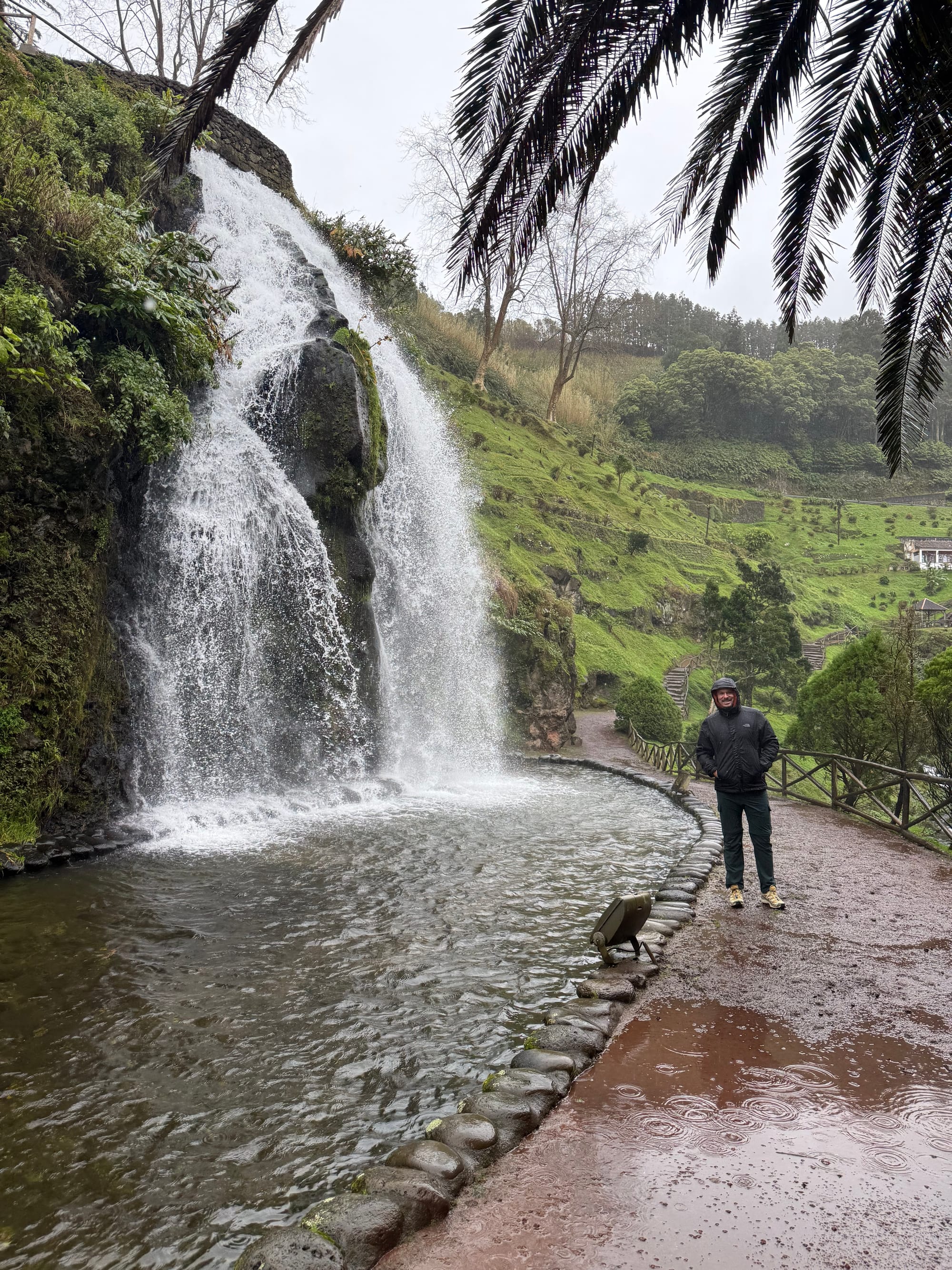
If the interior of the islands is about heat, the trek to the Cascata Salto do Cabrito waterfall is just about being wet. It’s not a hike to water, it’s a hike through it.
The trail took us past the Faja do Redondo Dam, a crumbling piece of concrete covered in moss that looked delightfully post-apocalyptic. Most of the time, we were walking on rickety metal catwalks suspended directly over rushing water, or through narrow valleys where the humidity is 200%. It’s inland, but we were surrounded by water above us, below us, and pushing through the huge industrial pipes that line the path. The waterfall at the end is a roar cutting through the rock, and by the time we reached it, we realized we’d been functionally underwater for the last few miles anyway.
Then at Ribeira Grande - an excellent co-working / co-living town by the way - the Atlantic smashes into the shore, so much so that the “piscinas naturais” get closed every once in a while simply because of dangerous waves and storm damage. We didn’t get to take a dip when we were visiting but locals assured us it was the place to see and be seen in calmer weather, assuming of course you don’t need a lifeguard rescue.
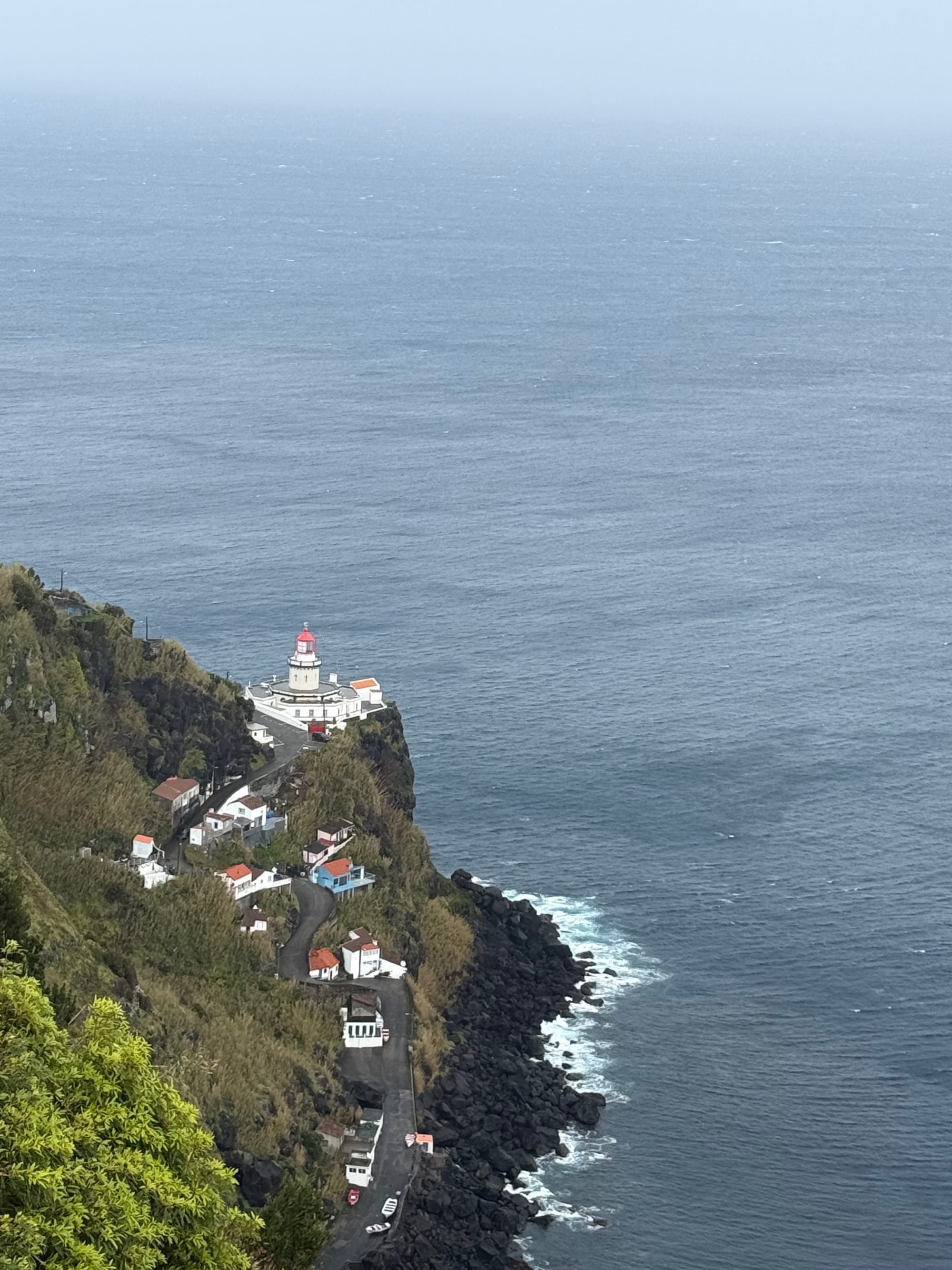
Nearby, we stood on high cliffs watching waves the size of houses disintegrate against the black lava rock. Villages like Agua de Pau get consistently soaked by spray and the waves are literally explosions.
The Thalassophile’s Fever Dream
By the end of the trip, I realized why the other travelers I saw had such a grim determination to be soaking wet out in the elements. The salt crust formed on my skin after five minutes near the blowholes; the environment is tactile. It’s an outdoor adventure place, not a resort place. There are a number of Azores islands to choose from (9 in total) but they’re all small and accessible. Most flights come in from Lisbon to Ponta Delgado (PDL) or Terceira (TER).
The Azores are a destination that engages rather than relaxes, and for people who would rather be cold and awestruck than warm and bored. If you’re looking to find yourself, go to a spa in Bali. In the Azores, we were constantly touched by the elements. Come here for the sensory reset.


