

Every James Bond film includes a scene where 007 steps into Q’s lab and glimpses the future—prototype gadgets, improbable ideas, and spycraft tech that feels one step ahead of the world. Listening to Nicholas Roman talk about swimrun, you get the sense he’s built something similar on the slick, rocky shores of the Stockholm archipelago: his own R&D lab for human-powered exploration, hydrodynamics, and the evolution of a still-young sport.
Swimrun, for the uninitiated, is a paired endurance race across island chains, where teams alternate between open-water swimming and trail running without stopping to change gear. Partners stay together the entire time, towing, pacing, and problem-solving their way across a course that blends wild nature with tactical decision-making. It is part adventure race, part endurance sport, and part communion with cold water and rock.
Roman, the CEO and Founder of EX Swimrun, came to the sport as a local. He has spent every summer of his life—more than five decades—on Runmarö, an island in Stockholm's archipelago surrounded by hundreds of neighboring islands within swimming distance. Yet it wasn’t until 2015, when a friend convinced him to try a race, that the sport truly clicked.

“You’d think I knew what swimrun was before 2015, considering it was founded on the islands there,” he says. “You can’t not love swimrun if you live at Runmarö because I have 600 islands within a 20-minute swim from my house. Since then, I’ve been hooked.”
Before that, Roman’s athletic identity was shaped in the United States. He grew up in Philadelphia between the ages of seven and fifteen, playing team sports like soccer and lacrosse. Running, he admits, was something to be endured, not enjoyed—“a punishment,” as he puts it. Swimrun reframed movement for him. It turned the punishment in his eyes into a passion for moving fluidly through a landscape.
Swimrun, for Roman, is truly an exercise in immersion.
“In the beginning and the end of the season, it’s crystal clear, so you don’t even need goggles,” he says. “We even drink the water. I drink the Baltic Sea when I’m out swimming.”
From Windsurfing Suits to Carbon Paddles
Roman’s first race was done in a windsurfing wetsuit from the 1980s, a relic of a different era of watersports.
“Windsurfing suits from the 80s had stiff shoulders because, if you’re pumping the sail, you want to keep your arms down. So swimming in that was really difficult. It was so hard on the shoulders.”
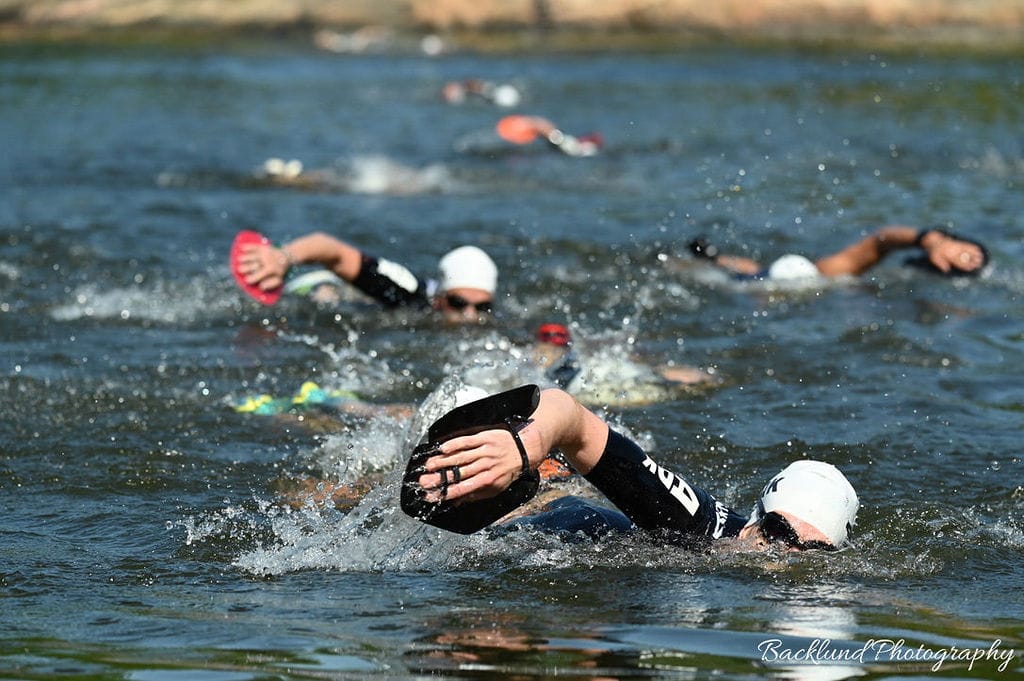
Today, the gear landscape looks nothing like it did then. He now races in a specialized front-zip swimrun suit with a running-specific lower half, a pool buoy three times the size of what he first used, carbon fiber paddles, and trail running shoes. Yes, that's right. You swim in shoes.
“The gear is totally different,” he says. “You don’t have to have the latest suit, but the difference is amazing when you start running.”
For Roman, equipment is about reducing friction between you and the environment as you flow through nature, and his mind is flooded with ideas on how to refine the experience to its quintessence.
“If you look at fast boats and fast airplanes, they’re always really pointy,” he says. “And if you look at big barges, they’re rounded. Our heads are rounded, so we’re swimming like barges, where we could be swimming like fighter jets.”
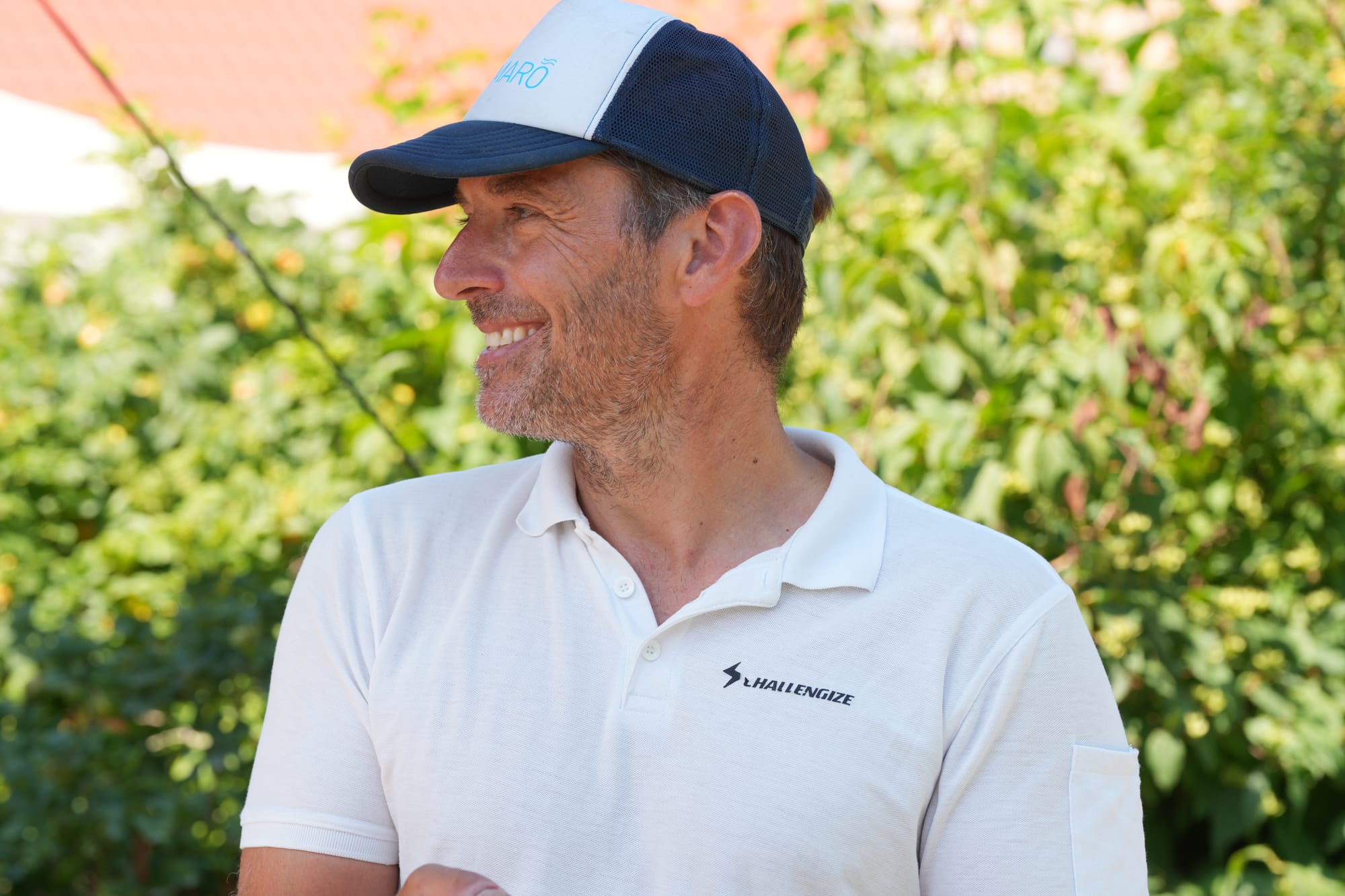
His solution? A swim cap with a hydrodynamic cone insert—“some sort of styrofoam or something inside that gives me a pointy head.” Half joking, half serious, he imagines future start lines filled with cone-headed athletes.
Listen to Nicholas Roman discuss his most innovative ideas for the sport in this episode of The Outdoor Journal Podcast.
In swimrun, the pull buoy continues to be one of the sport’s most defining pieces of gear, and its evolution mirrors the evolution of the sport itself—from a generic tool swapped from another sport to a finely-tuned, specialized hydrodynamic aid.
When it comes to buoyancy, Roman’s mind races with ideas. In the early days of the sport, swimrunners adopted the same foam blocks swimmers squeeze between their thighs in a lap pool. Athletes tied them to their legs with bungee cord and dragged them like awkward sea anchors over rocks and trails. It worked, but not without the cost of frustration. The buoys would snag on trees and disrupt running strides.
As the sport grew, purpose-built swimrun buoys appeared on the market. They got larger (more flotation to offset the extra drag of shoes) and more hydrodynamic (teardrop shapes instead of bricks). But they were still leg-mounted, and on technical trails, they could become genuinely hazardous.
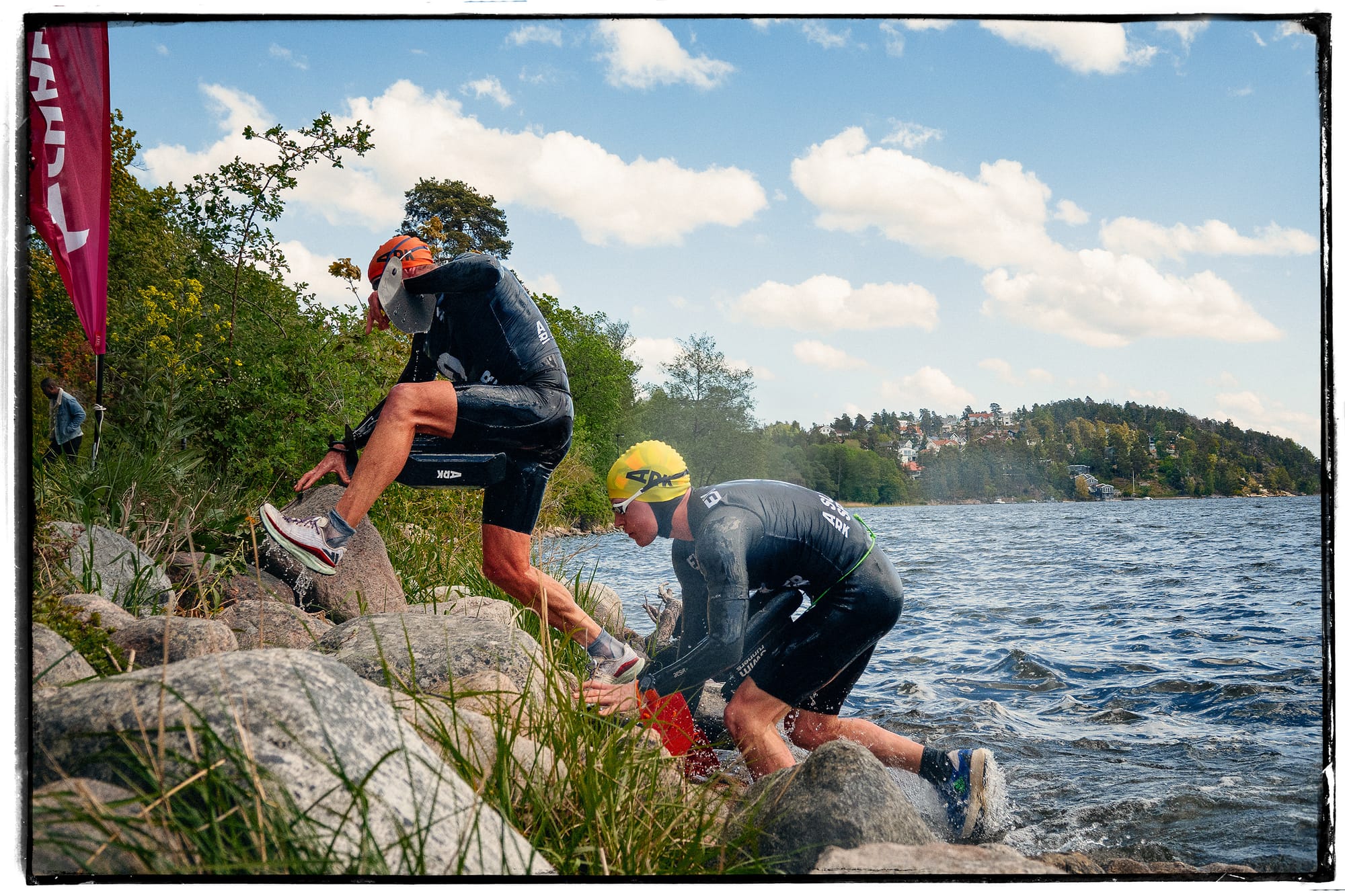
The most recent innovation came when athletes started attaching the buoy to the waist instead of the leg. This shortened transition time and allowed athletes to slice through single-track forest trails without snagging.
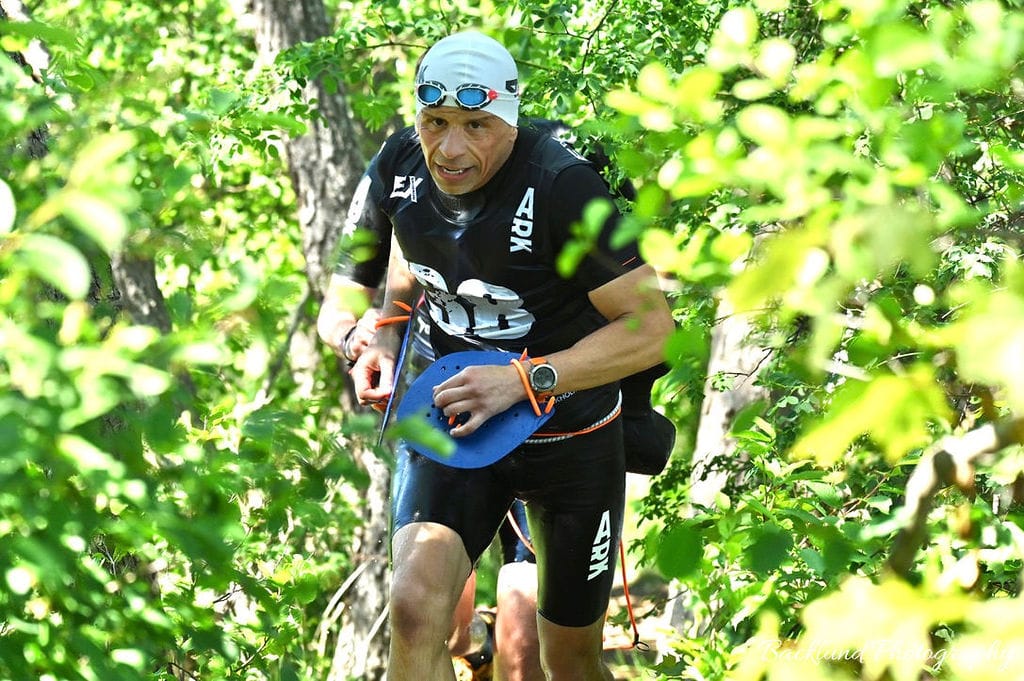
All the while, Roman is busy in his lab, concocting the pool-buoy killer.
“I want to have a suit with air inside it so you don’t need a pool buoy. You just press when you go in the water, it fills with a little air, and it keeps you floating like a buoy.”
“I don’t think we’ve seen the last innovation when it comes to swimrun gear.”
Why Triathletes Are Finding Their Way to the Islands
Swimrun has steadily become a refuge for former triathletes and road runners burned out on rigid courses and stopwatch obsessions. Roman sees it clearly.
Triathlon, he says, is linear. Prescribed. A single track of improvement defined almost exclusively by time. Swimrun, by contrast, offers freedom: route choice, the shared experience of a partner, and the ever-changing variables of both water and terrain.
It is less about competition and more about collaboration—with your teammate and with the environment. Less about perfection, more about play.
Transitions, Body Paint, and the Soul of the Sport
Ask Roman about the strangest gear ideas he’s seen, and he laughs. The early days were full of experimentation: flippers, backpacks, snorkels, hacked wetsuits.
“When you look at the difference between the best and the second-best swimrunners, it’s the transitioning,” he says. “I’ve trained so much on transitions because you can win so much time there. If you have flippers on, it’s like working in the entirely opposite direction.”
One of the most telling memories from the early days of swimrun reads like a scene from Friday the 13th, with racers hacking away at their suits like the iconic, machete-branding villain.
“I remember my first race—people were taking brand-new suits and cutting the legs and arms off right there at the start line.” (Can you hear the screams?)
Then there are the ideas that arrive after a few beers.
“In the future, why even have suits?” Roman muses. “They should just body-paint some sort of heat-absorbing paint on you. You get into a tent, it sprays you, it lasts six hours, then it disappears. It’s just like an extra layer of skin.”
Absurd? Maybe. But beneath the humor is a serious philosophy: remove barriers. Streamline. Let the body move through nature as freely as possible.
¨We want to put the Swim back in Swimrun. We try to design as many swims and transitions as possible, not just a few long swim sections. That’s what the sport is for us. It’s island hopping.¨
Building a Race, Not a Business Exit
Roman launched EX Swimrun in 2019. Since then, he has organized multiple race formats—from puke-your-guts-out Supersprints to open-world Safari explorations to entry-level “Try Swimrun” events.
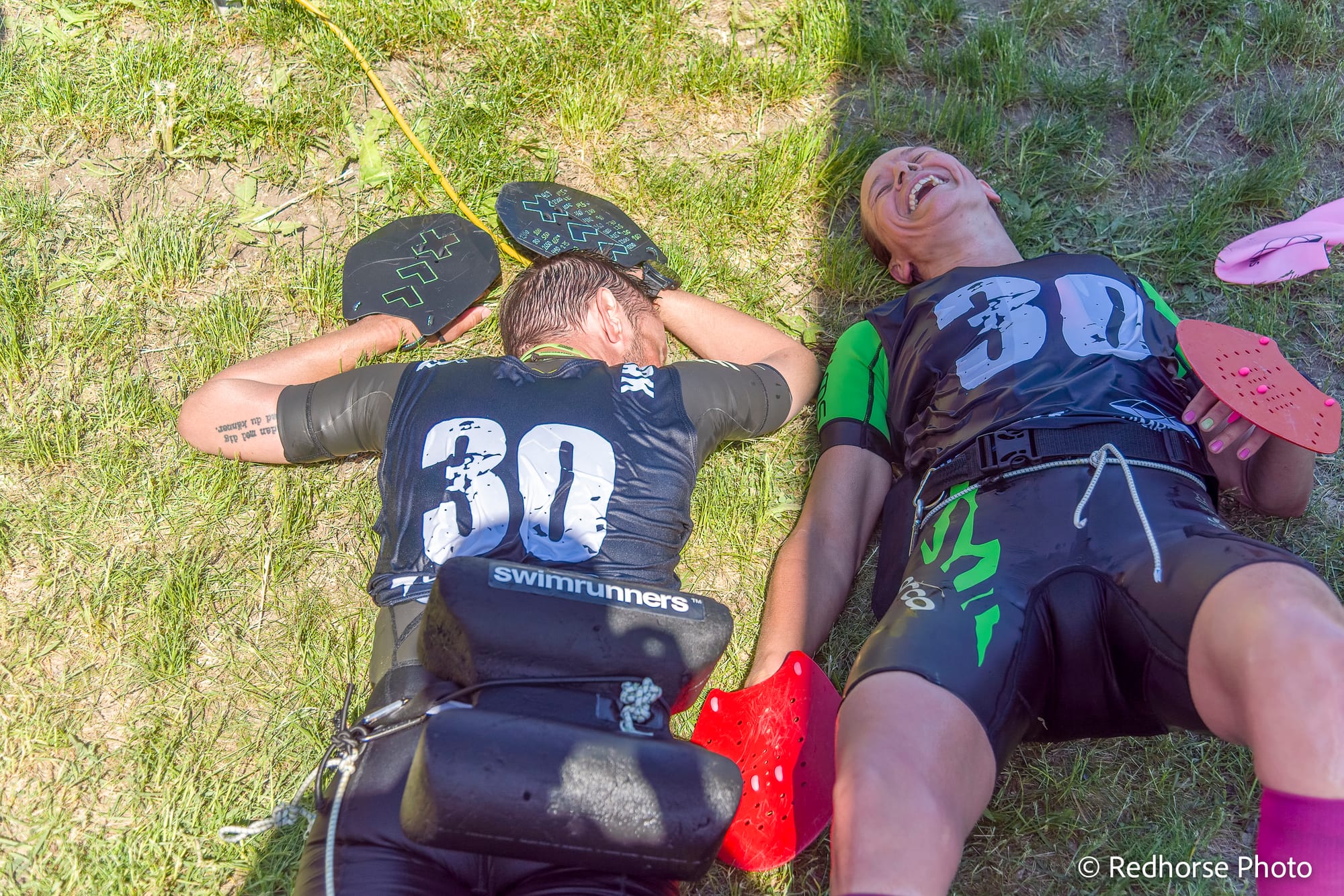
“At the moment in Sweden, we’re seeing the second generation of swimrunners coming through,” he says. “The pandemic hit the sport hard, but it’s growing again. And that’s a lot to do with organizers.”
What distinguishes EX from the largest organization in the sport, ÖTILLÖ, is not hostility but philosophy, a local mindset.
“Not head-to-head,” he explains. “We have different interests. One side is more business-driven, maybe thinking about exit strategies. Us, the local organizers—we’re not trying to sell a company. We’re trying to get more people involved in swimrun.”
It’s an atmosphere of collaboration amongst organizers rather than competition. Roman has been working with the Founder of ÖTILLÖ, Michael Lemmel, and others for over a year and a half to make Swimrun an official part of the Swedish Triathlon Foundation, which would improve access to funding, insurance, and communication with youth programs.
Safari Racing and the Return of Exploration
Out of all of EX Swimruns’ innovations, Roman’s baby is the Safari format: an open-world course where teams navigate between checkpoints across islands, choosing their own swim-to-run ratios, lines, and strategies.
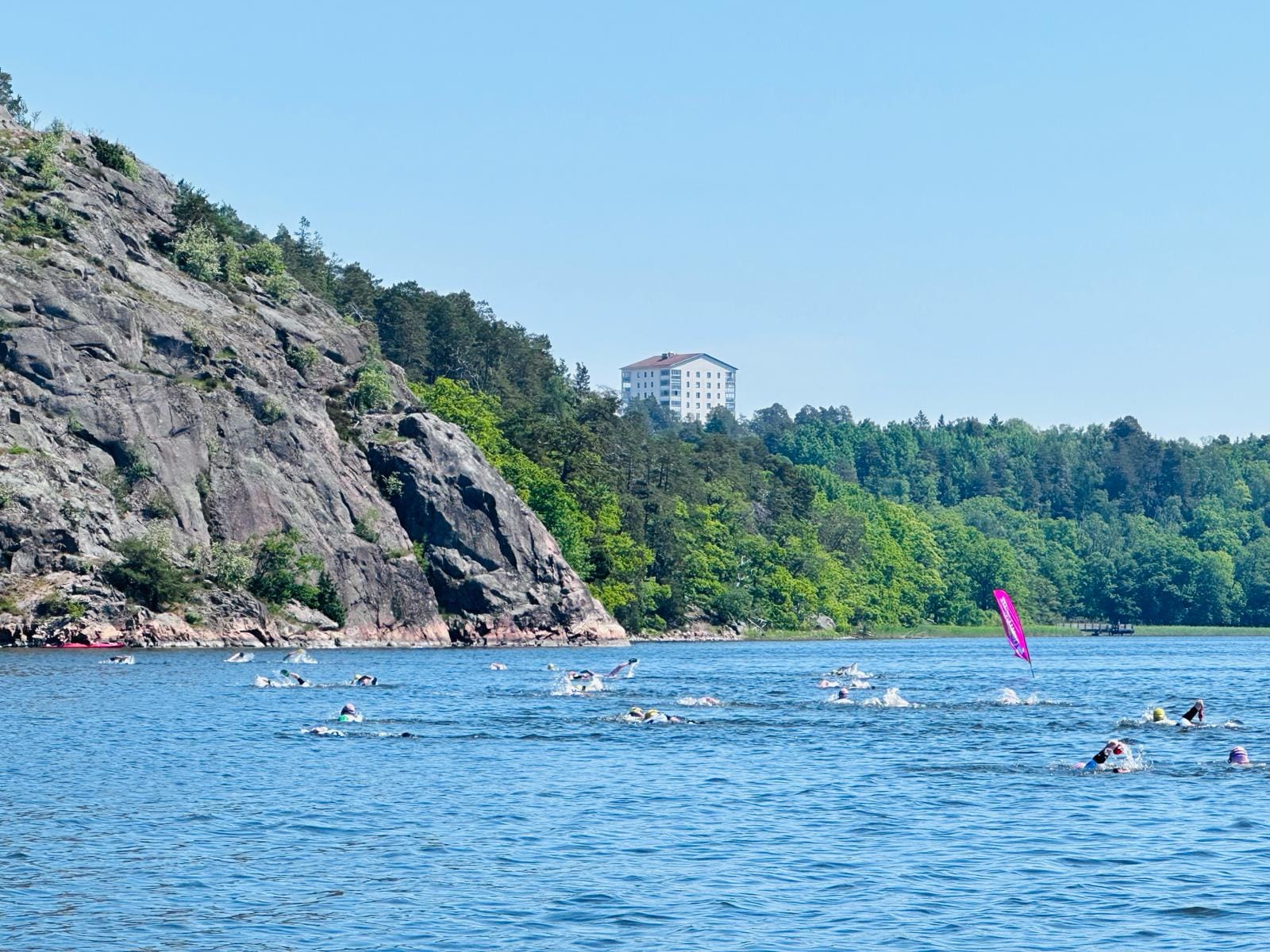
“My biggest passion is the Safari event. It’s the future of swimrun if you ask me.”
In this format, the sport becomes something closer to its original soul: exploration. You can swim straight across a channel or detour via land. You can choose to brave the cold water or heat up over the rocks. You are not just racing—you are navigating.
“It’s the exploration/adventure experience of swimrun that we need to bring back,” he says. “It can’t all be about elite racing and making money, or we lose the essence.”
Next year, the Safari will start by boat at the edge of Sweden’s newest marine national park in the outer limits of the archipelago, with teams free to choose their lines between four checkpoints at the edge of the Baltic Sea.
“There’s nothing out there... just the ocean. We’re swimming at the edge of the world.”
Sweden’s newest National Park, Nämdöskärgården, opened last September. The park spans about 25,300 hectares, with roughly 97 % water among its islands, skerries, and coastal land. It protects a wide variety of marine and coastal ecosystems, including seagrass beds, mussel banks, and bird habitats. The park plays a key role in safeguarding biodiversity in the Baltic Sea, addressing threats like eutrophication and habitat loss. Some islands within the park maintain traces of their historic use, such as remnants of fishing huts and much older settlements.
Looking for a swimrun wetsuit upgrade? Check out the Sumarpo hyperlight for its elite combination of flexibility and comfort created with sustainably-sourced materials. Discount code: OJ20
A Castle, a DJ, and a Community
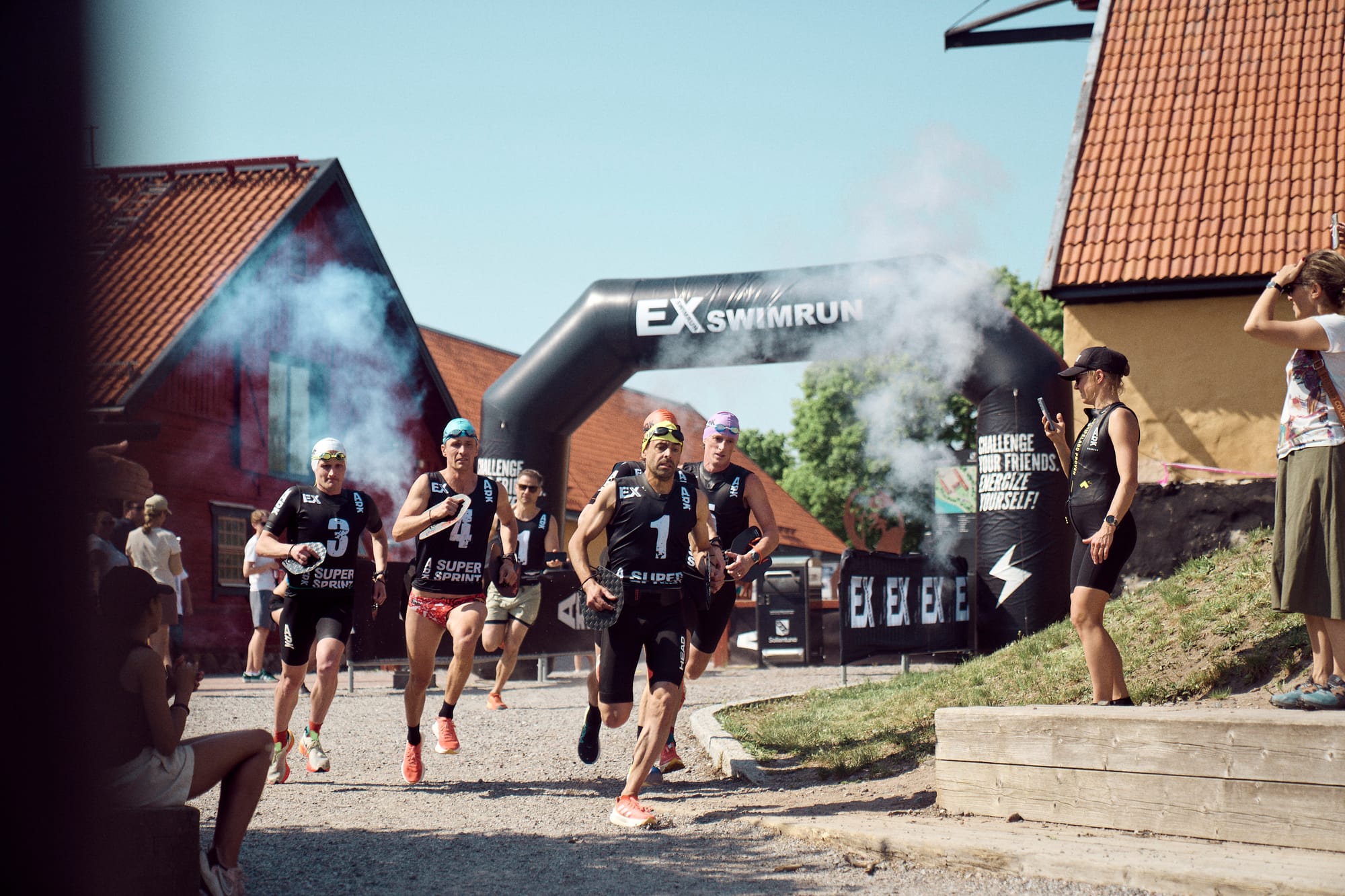
For spectators and families, EX Swimrun can be as much a festival as a race.
The Supersprint unfolds in front of a 17th-century castle at Arena Edsvik, which was formerly a gathering place for Swedish nobles. Athletes run and swim a very short but intense course (about 1 km running, 200 m swimming), in loops, which allows viewers to see almost the entire race from one vantage point and cheer on the grueling uphill finish.
“For a spectator, it’s the best sport to watch,” Roman says. “You can see everything.”
There is a DJ, good food, Italian ice cream, coffee, and kids running around on the grass.

“I tell the DJ, if you can see people dancing, you’re doing a good job.”
It is, in many ways, the antithesis of the lonely triathlon transition zone, designed with the utilitarian purpose to get in and out as quickly as possible. It feels communal. Alive.
Designing a Race You Can’t Not Race
Perhaps there’s no higher ambition in the racing world than to design a race you can’t help but run yourself.
Roman doesn't just organize the course. He tests, refines—and then pins on a bib on race day.
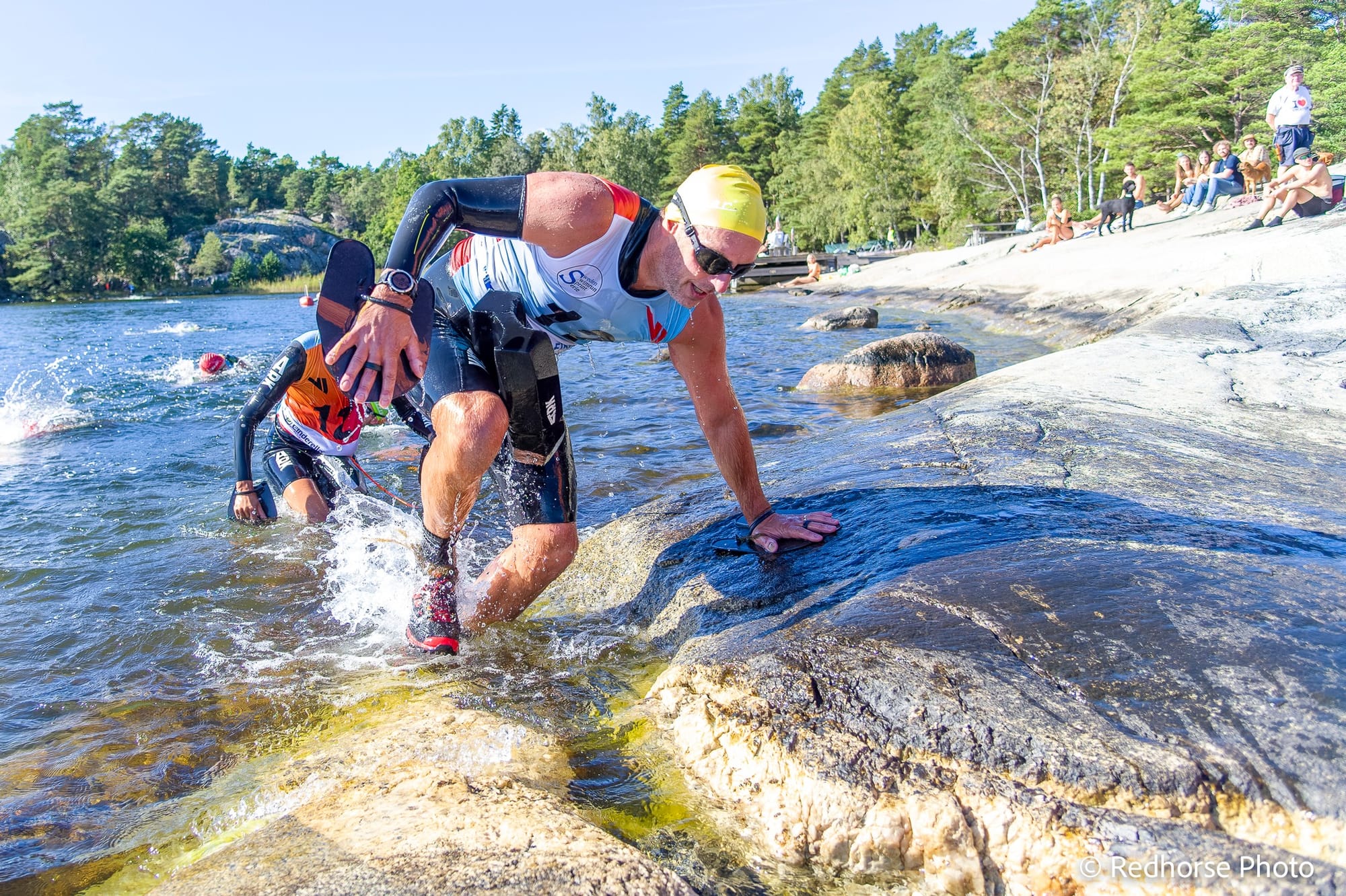
In a sport born from cold water, granite islands, and the simple question of “what if we just keep going,” Nicholas Roman embodies the restless curiosity that keeps swimrun evolving. Like Q in his lab, he is always tinkering, where innovation is measured in immersion, removing the friction between us and the archipelago.
Listen to the full interview on The Outdoor Journal Podcast.

Follow EX Swimrun and Nicholas Roman:
Instagram: @roman_nicholas, @exswimrun
Find the perfect race format and distance for you at EXSWIMRUN.SE


